Theo Cisu MD I Urologist and Vasectomy Clinic

"How long until I can get back to normal?"
This is the question Dr. Cisu hears most after "Does it hurt?" Men want to know:
When can I go back to work?
When can I exercise?
When can I have sex?
When am I actually sterile?
The good news: vasectomy recovery is faster than most men expect.
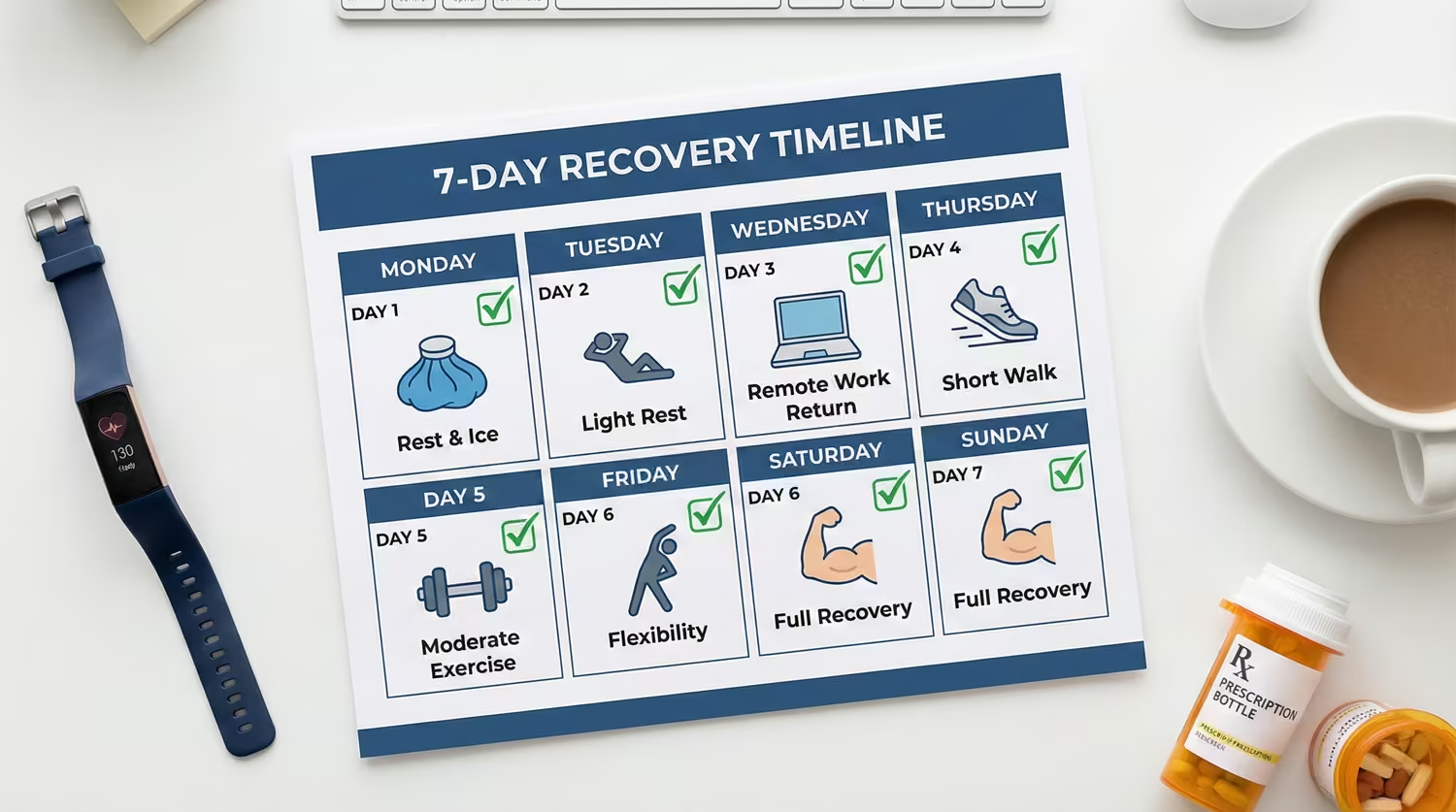
The procedure takes 20 minutes. Most return to desk work in 2-3 days. Full physical activity resumes within a week.
The bad news: you're not sterile right away, that takes 8-16 weeks and requires testing.
Here's your complete day-by-day recovery roadmap based on American Urological Association guidelines, medical research, and Dr. Cisu's experience with hundreds of Virginia vasectomy patients.
This tells you what to expect, what's normal, and when to worry.
The vasectomy is done. You're numb, you're leaving the office, and you're wondering what happens next.
You'll rest in the exam room for 5-10 minutes while the staff reviews post-op instructions.
The local anesthetic is still working, you'll feel numb, possibly tingly, but no pain yet.
A small gauze pad or bandage covers the tiny puncture site.
You'll get dressed (carefully) and receive written instructions covering:
Yes, in most cases. Vasectomy uses only local anesthetic, so you're fully alert. However, some men feel anxious or lightheaded after the procedure. If you're uncertain, arrange a ride.
You'll know within 15-20 minutes if you feel capable of driving.
Go straight home, don't stop for groceries, don't run errands. If you're a passenger, recline the seat if possible.
Avoid sitting upright for extended periods. Some men notice mild cramping or achiness starting as the anesthetic wears off.
This is critical recovery time. What you do in the next few hours significantly impacts how you feel tomorrow.
Lie down on the couch or bed. Prop your feet up slightly.
Watch TV, read, scroll on your phone, but stay horizontal.
Don't walk around the house doing tasks.
Don't cook dinner. Don't play with the kids. Rest.
Apply ice packs for 20 minutes every hour while awake.
Use a bag of frozen peas, gel ice packs, or crushed ice wrapped in a thin towel.
Don't apply ice directly to skin. Ice reduces swelling, minimizes bruising, and helps with pain.
Why it matters: Swelling that develops in the first 24 hours determines how uncomfortable the next 2-3 days will be. Ice aggressively now, suffer less later.
Wear snug-fitting briefs or a jockstrap that holds everything in place. Gravity is your enemy right now, you want support to prevent pulling and swelling. Boxers or loose underwear make recovery worse.
Most men rate pain at 2-4 out of 10 during the first 6 hours. It feels like a dull ache, similar to being kicked in the groin but much milder and constant rather than sharp.
Some men feel virtually nothing.
A few rate it 5-6/10.
Take ibuprofen (Advil, Motrin) 400-600mg or acetaminophen (Tylenol) 500-1000mg as recommended. Don't wait for pain to get bad – stay ahead of it. Ibuprofen works better than acetaminophen for this type of discomfort because it reduces inflammation.
Vasectomy doesn't require opioid pain medication. Over-the-counter options handle the discomfort fine.
Eat normally. Stay hydrated. No dietary restrictions. Avoid alcohol for the first 24 hours – it can increase bleeding risk and interact poorly with pain medication.
Your body is starting the healing process. The tiny puncture site is clotting. Your vas deferens tubes (now cut and sealed) are initiating tissue repair. Minor bleeding under the skin may cause bruising over the next 12-24 hours. This is all normal.
You'll wake up day 1 wondering: How bad is this going to be?
For most men: not as bad as you feared. For some: worse than expected. Here's what's normal.
Day 1 typically feels worse than day of surgery because the local anesthetic has completely worn off and inflammation peaks. Expect:
Day 2 usually feels slightly better than day 1, or about the same. You're not worse – you're stable. Improvement becomes noticeable by day 3-4.
Mild to moderate scrotal swelling is normal. Your scrotum may look slightly larger, feel puffy, or appear fuller than usual. The swelling shouldn't be dramatic – we're talking 20-40% increase in size, not doubling.
Minor bruising is common. You might see:
This is normal and doesn't indicate a problem. Bruising can take 7-10 days to fully fade.
20 minutes on, 40-60 minutes off, while awake. Ice helps most in the first 48 hours. After that, you can reduce frequency.
Stay home. Minimize walking and standing. Lying down with feet elevated is ideal. Short trips to the bathroom are fine. Walking around the house for 5-10 minutes at a time is okay. But don't walk the dog, don't go grocery shopping, don't do yardwork.
Wear snug briefs or a jockstrap even when sleeping. Support matters. Some men sleep on their back with a small pillow under the scrotum for additional support.
You can shower day 1 or day 2. Let water run gently over the area – don't scrub. Pat dry very gently. Some men wait until day 2-3 for the first shower if the bandage is still in place. Don't take baths, hot tubs, or go swimming for at least 7 days.
Continue ibuprofen or acetaminophen every 6-8 hours around the clock – don't skip doses even if you feel okay. Staying ahead of pain and inflammation is easier than catching up.
Call your doctor if you experience:
These could indicate infection, hematoma (blood collection), or other complications requiring medical attention.
This is when most men turn the corner. Pain decreases noticeably. You start feeling more like yourself.
What changes:
Most men rate discomfort at 1-3 out of 10 by day 3-4. It shifts from constant aching to occasional twinges. You might forget about it for hours at a time.
Swelling peaks day 2-3, then slowly improves. The area still looks slightly puffy but less so than day 1-2.
Walking feels easier. Sitting doesn't require careful positioning. You can move more normally, though sudden movements may still cause discomfort.
Most men with desk jobs return to work on day 3-4. If your job involves:
You're probably fine to return. Take it easy. Don't push through pain. If you need to rest mid-day, do it.
(construction, warehouse work, landscaping, etc.), wait until day 7-10 minimum. Returning too soon risks complications.
Light activity is now okay:
Still avoid:
By day 3-5, ice helps less. Use it if swelling increases or you feel sore after activity. Otherwise, you can stop.
Continue wearing snug briefs or a jockstrap. Support prevents pulling and speeds healing. Most men continue this through day 7-10.
By day 4-5, you can shower normally without worrying about the incision site. The tiny puncture has sealed. No bandage needed. Just avoid soaking in baths or swimming pools.
By the end of week 1 (days 7-10), most men feel nearly back to normal physically.
Minimal to none. You might notice occasional sensitivity if something bumps the area, but constant discomfort has resolved. Many men stop taking pain medication by day 5-7.
Mostly gone. The scrotum looks close to pre-surgery size. Minor residual puffiness may linger another week.
Fading but still visible. Yellow-green discoloration can persist 10-14 days as your body reabsorbs the blood.
You can now:
Still avoid until week 2:
Physically: Yes, most men can resume sex around day 7-10. The incision has healed enough that intercourse won't cause damage.
You are NOT sterile yet. Sperm remains in your reproductive tract beyond where the vas deferens was cut. It takes 8-16 weeks and 15-20 ejaculations to clear all sperm.
You must use backup contraception (condoms) until semen analysis confirms zero sperm. Having unprotected sex at week 1 can absolutely cause pregnancy.
That's between you and your partner. Some men want to wait until discomfort fully resolves (week 2-3). Others feel fine by day 7-10. Listen to your body. If it hurts, stop.
Ejaculating won't damage the surgical site. The concern is comfort, not safety.
By week 2, physical recovery is essentially complete. The surgical site has healed. Swelling is gone. Pain is gone. You're cleared for all normal activities.
Week 2-3, you can resume:
Don't go from zero activity to max-intensity workouts. Ease back in. Start with 50-60% of your normal routine for a few days, then increase.
If activity causes discomfort, back off. Pushing through pain can cause complications like epididymitis (inflammation) or sperm granuloma (sperm leak forming a small lump).
By week 2-3, sex should feel completely normal. No pain, no sensitivity, no restrictions.
Still use condoms or backup contraception. You're physically recovered but not yet sterile.
The surgical site is healed. You may see:
Externally, everything looks normal. Partners can't tell you had surgery by looking.
Most men feel 100% normal by week 3-4. A small percentage (5-10%) notice occasional mild sensitivity for 4-8 weeks, especially with vigorous physical activity. This resolves as internal healing completes.
You feel fine. Everything works normally. You're tempted to stop using condoms. Don't.
Physical recovery and sterility are not the same thing. You're not sterile until testing proves it.
Sperm is produced in your testicles, matures in the epididymis (storage area), and travels through the vas deferens to mix with semen. When your vas deferens is cut, sperm already beyond the cut point remains in your system – stored in the seminal vesicles, urethra, and further down the reproductive tract.
This residual sperm takes time and ejaculations to clear out.
Most men need 15-20 ejaculations after vasectomy to clear residual sperm. More ejaculations = faster clearance.
At 10-12 weeks post-vasectomy, provide a semen sample for laboratory analysis. Your doctor's office will give you:
The lab examines your sample under a microscope looking for sperm.
Success. You're sterile. Stop using backup contraception.
A few dead sperm cells present, but very low numbers and not moving. Most guidelines say this is safe – pregnancy risk is extremely low. Some doctors want one more test in 4 weeks to confirm.
Live, swimming sperm found. This is a problem. You're not sterile yet. Retest in 4-8 weeks. If sperm persists at the second test, the vasectomy may have failed (recanalization) and requires repeat surgery.
About 1 in 2,000 vasectomies fail due to recanalization (the cut ends of the vas deferens reconnect). This happens most often in the first 3-6 months post-surgery. If you skip semen analysis and have unprotected sex, you won't know you're still fertile until your partner gets pregnant.
Don't skip this step. Testing is required to confirm vasectomy success.
Only after receiving lab results showing azoospermia or rare non-motile sperm below 100,000/mL. Until then, use condoms or another backup method.
Most vasectomy recovery issues resolve on their own. But some symptoms require medical attention. Here's how to tell the difference.
Dull aching, occasional sharp twinges when moving, sensitivity to touch. Managed with over-the-counter pain medication.
Scrotum appears 20-50% larger, feels puffy. Gradually decreases. No fever, no severe pain.
Purple, yellow, or green discoloration spreading from surgical site. No increasing pain or swelling.
Pea-sized or smaller firm spots are usually scar tissue or minor sperm granulomas. They don't hurt, don't grow, and often disappear over weeks-months.
Mild discomfort with deep pressure or vigorous activity. Resolves as healing completes.
This is normal anatomy for most men – not caused by vasectomy.
Suggests infection. Requires antibiotics.
Pain that gets worse instead of better, or rated above 6-7/10 after day 2. Could indicate hematoma, infection, or torsion.
Scrotum doubling in size over a few hours, or hard swelling on one side. May indicate hematoma (blood collection requiring drainage).
Signs of cellulitis (skin infection). Needs antibiotics immediately.
Indicates infection. Needs evaluation and antibiotics.
Marble-sized or larger lumps that appear suddenly and grow over days could be hematoma or large sperm granuloma requiring treatment.
Rare but serious. Requires immediate medical attention.
Could indicate testicular torsion (twisted testicle) or epididymitis (infection/inflammation). Needs same-day evaluation.
Vasectomy complications are rare (2-3% of cases), but when they happen, early treatment prevents bigger problems.
Want to heal quickly and minimize discomfort? Follow these evidence-based strategies:
20 minutes every hour while awake. This single intervention reduces swelling and pain more than anything else.
Snug briefs or jockstrap. Support reduces pulling, limits swelling, speeds healing.
Men who push through and stay active days 1-3 typically have more swelling, more pain, and slower overall recovery. Two extra days of rest now saves a week of discomfort.
Ibuprofen 400-600mg every 6-8 hours reduces inflammation better than taking it "as needed."
Drinking plenty of water helps your body clear cellular debris and supports healing.
Alcohol increases bleeding risk and can worsen swelling.
Men who resume heavy exercise before day 10-14 have higher rates of complications (epididymitis, sperm granulomas). Wait the full two weeks.
Side sleeping can cause pulling. Back sleeping with a small pillow under your scrotum for elevation helps.
Your body needs protein to repair tissue. Lean meats, eggs, fish, beans help optimize healing.
Straining during bowel movements increases pressure in the area. Eat fiber, stay hydrated, use stool softeners if needed.
Men sabotage their own recovery by making these errors:
Waiting only 3-5 days before resuming intense exercise causes post-vasectomy pain syndrome in some men. Wait 10-14 days minimum.
You feel okay day-of because you're still partially numb. Skipping ice means worse swelling tomorrow. Use ice even if you don't think you need it.
Gravity and movement cause more swelling without support. Wear briefs.
You're not sterile until testing confirms it. Sperm can persist 3-6 months. Pregnancies happen when men skip this step.
Waiting until pain is bad makes it harder to control. Stay ahead of it with scheduled doses.
These activities involve more lifting, bending, and standing than you realize. Rest means rest.
Heat increases swelling and bleeding risk. Stick to quick showers.
Men delay calling about fever, severe pain, or increasing swelling because they "don't want to bother the doctor." Early intervention prevents complications from getting worse.
"I feel fine, so I must be sterile." Wrong. Only testing confirms success. About 1-2% of men who skip testing eventually cause unwanted pregnancy.
Recovery timelines vary based on your occupation and activity level.
If you have a physically demanding job, schedule your vasectomy on a Thursday or Friday so the weekend extends your recovery time.
Vasectomy recovery is measured in days, not weeks. Most Virginia men:
The procedure itself is quick and minimally invasive.
The recovery is faster than most surgical procedures.
The biggest challenge isn't physical healing, it's remembering to use backup contraception until semen analysis confirms success.
Follow your doctor's post-op instructions. Ice aggressively the first 48 hours. Rest more than you think you need.
Complete your semen analysis. Do these things, and you'll have an uneventful recovery.
Want to discuss recovery expectations for your specific situation?
Contact Dr. Theodore Cisu
Phone:
(434) 823-7896 (Charlottesville)
(540) 332-5630 (Fishersville)
Charlottesville/Crozet Office:
540 Radford Lane, Suite 250
Charlottesville, VA 22903
Phone: (434) 823-7896
Fishersville Office:
70 Medical Center Drive, Suite 107
Fishersville, VA 22939
Phone: (540) 332-5630
Online: theocisumd.com/book-an-appointment
Dr. Cisu performs all vasectomies using the no-scalpel, no-needle technique, which research shows reduces recovery time by 25-50% compared to traditional methods. Schedule a consultation to learn more about the procedure, recovery expectations, and whether vasectomy is right for you.
Most consultations are available within 1-2 weeks. Get your questions answered before making any decisions.


