Theo Cisu MD I Urologist and Vasectomy Clinic

If you've been putting off vasectomy because you're worried about pain, needles, or scalpels near your testicles – you're not alone.
Fear of the procedure itself stops more men from scheduling than concerns about permanence, cost, or recovery. The mental image of surgical instruments, sharp needles injecting anesthetic, and incisions being cut into the scrotum makes even decisive men hesitate.
That's exactly why Dr. Cisu uses the no-scalpel, no-needle technique. This modern approach eliminates the elements men fear most while maintaining the same 99.85% effectiveness. The procedure works the same way – blocking sperm from reaching semen – but uses advanced instruments and anesthesia delivery that reduce pain, speed recovery, and lower complication rates.
Here's what makes no-scalpel, no-needle vasectomy different from traditional methods, what research shows about its benefits, and why it's become the standard of care recommended by the American Urological Association.
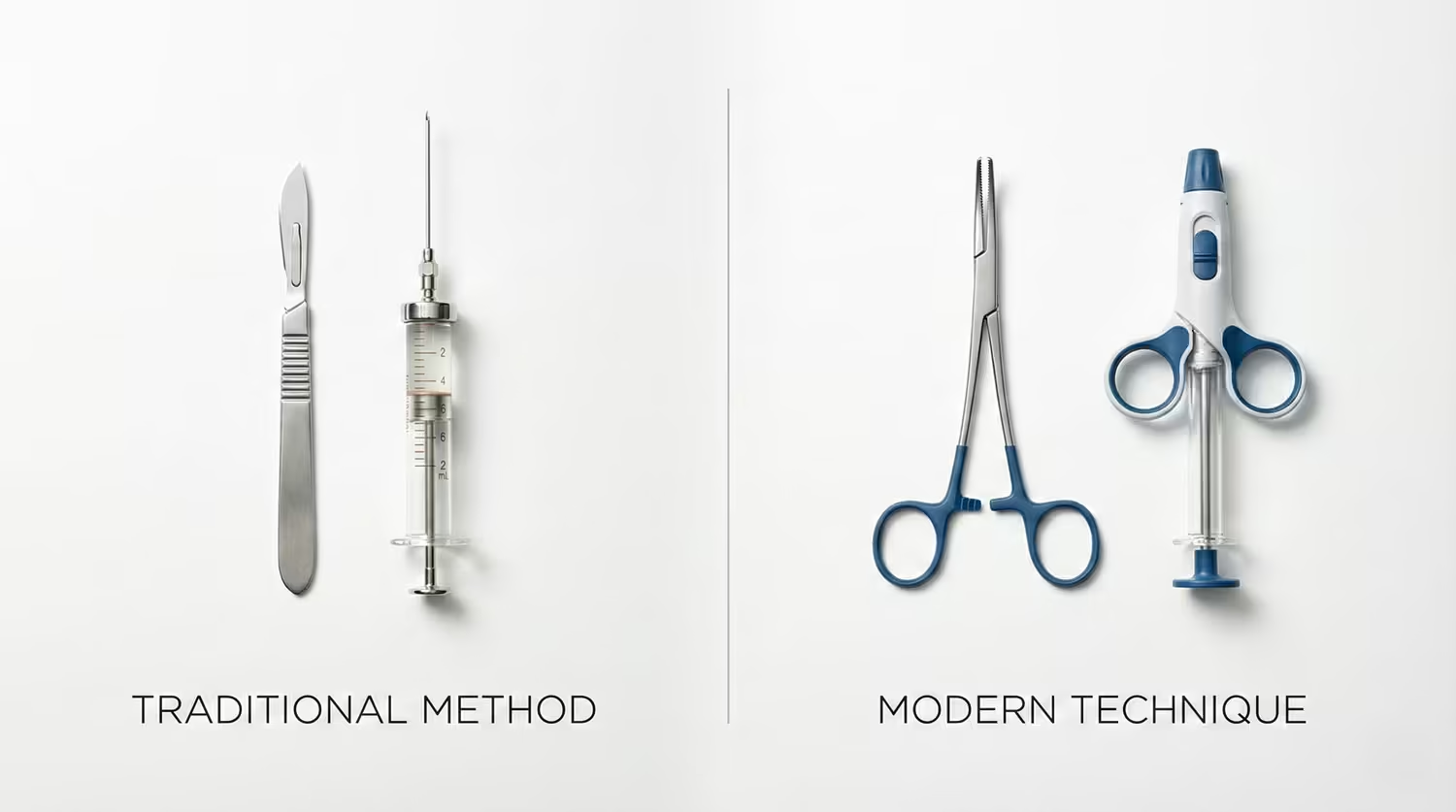
To understand why no-scalpel vasectomy is better, you need to know what the traditional technique involved.
The surgeon uses a needle and syringe to inject local anesthetic (lidocaine) into both sides of the scrotum. This requires 2-4 needle sticks to adequately numb the area. Men report the needle injections as the most painful part of traditional vasectomy – sharp stinging pain followed by burning as the anesthetic spreads.
Once numb, the surgeon uses a scalpel to make one or two incisions in the scrotum – either a single midline cut down the center, or two separate cuts on each side. These incisions are typically 1-2 centimeters long (roughly half an inch) to provide enough room to access the vas deferens tubes.
Through the incision, the surgeon locates the vas deferens by feel, pulls it through the opening, cuts a segment out, and seals the ends using sutures (stitches), clips, or cautery (heat).
After both vas deferens tubes are cut and sealed, the incisions are closed with dissolvable stitches. This requires 2-4 stitches per incision.
The traditional technique works – it successfully blocks sperm and prevents pregnancy. But it causes more discomfort, requires more healing time, and has higher complication rates than modern methods.
Because until the 1980s, these were the only instruments available. Scalpels and needles were standard surgical tools. The technique worked reliably, so there was no urgency to develop alternatives until Chinese physician Dr. Li Shunqiang invented the no-scalpel approach in 1974.
No-scalpel vasectomy uses specialized instruments that eliminate the need for scalpel incisions and reduce tissue trauma.
The scrotum is numbed with local anesthetic. With traditional no-scalpel, this still requires needle injections, though fewer sticks than the old method.
Instead of cutting with a scalpel, the surgeon uses a specialized sharp-pointed hemostat (a surgical clamp with very fine tips). This instrument makes a tiny puncture hole – about 2-3mm wide, roughly the size of a pencil eraser – in the center of the scrotum.
The puncture is so small it doesn't qualify as an "incision" in the traditional sense. It's a controlled penetration that separates tissue fibers rather than cutting through them.
Using a second specialized instrument (a ring forceps or dissecting forceps), the surgeon gently stretches the tiny puncture opening to about 5-7mm. This stretching technique separates tissue along natural planes rather than cutting through blood vessels and nerves.
The surgeon locates the vas deferens tube by feel through the scrotal skin, no different from traditional technique. The vas is grasped with the ring forceps and gently pulled through the small stretched opening.
This part is identical to traditional vasectomy. A small segment of the vas deferens is cut out (usually 1-2cm). The two ends are sealed using cautery (burning the tissue) and then either tied with sutures, clipped with titanium clips, or the cut ends are placed in different tissue layers (fascial interposition) to prevent reconnection.
The first vas deferens is placed back inside the scrotum. The surgeon then locates the second vas deferens and pulls it through the same small opening, no need for a second puncture. The process repeats: cut, seal, replace.
Here's the key difference: the puncture is so small that when you release the skin, it closes on its own. The edges come together naturally. No stitches required. A small piece of sterile gauze or a single bandage covers the spot.
No-scalpel vasectomy takes 15-20 minutes total – slightly faster than traditional technique because there's no time spent making incisions or placing stitches.
For many men, the scariest part of vasectomy isn't the surgery itself, it's the thought of needles injecting anesthetic into the scrotum.
Traditional vasectomy requires 2-4 needle sticks to numb the area. These injections cause sharp pain and burning as the lidocaine spreads. Even with a skilled surgeon, men describe this as an 8-10/10 pain experience lasting 10-15 seconds per injection.
No-needle anesthesia eliminates this entirely.
Instead of a needle and syringe, the surgeon uses a jet injector (also called a needle-free injection system). This medical device uses high pressure to deliver a fine stream of liquid anesthetic through the skin without a needle.
Men describe no-needle anesthesia as a quick spray sensation or a snap against the skin – similar to being flicked with a rubber band. There's brief, mild discomfort (rated 2-3/10) for a fraction of a second, followed by immediate numbness.
Compare this to needle injections: sharp stabbing pain (8/10) for 10-15 seconds, burning sensation, then gradual numbing over 30-60 seconds.
Yes. Multiple studies confirm jet injectors deliver anesthetic as effectively as traditional needles. The skin is completely numb. The difference is how you get there, not the end result.
Jet injector devices cost $2,000-$5,000, which is why some practices stick with needles and syringes that cost pennies. Surgeons also need specific training on proper jet injector technique.
If eliminating needle anxiety matters to you, specifically ask whether your provider uses no-needle anesthesia. Don't assume "no-scalpel" automatically means "no-needle" – they're separate techniques that work well together but aren't always combined.
No-scalpel vasectomy isn't marketing hype. Decades of research comparing traditional and no-scalpel techniques show clear advantages.
A systematic review published in the Journal of Urology analyzing 2,204 vasectomies found:
When combined with no-needle anesthesia, pain reduction exceeds 40% compared to traditional needle-and-scalpel method.
Studies from the British Journal of Urology International tracking 1,200+ patients found:
No-scalpel technique cuts recovery time nearly in half.
Research published in BMC Urology reviewing 105,000+ vasectomies identified significant differences:
These aren't minor differences. Choosing no-scalpel technique significantly lowers your risk of complications.
Both techniques achieve the same pregnancy prevention rate (99.85%). No-scalpel doesn't compromise effectiveness – it improves the patient experience while maintaining outcomes.
The AUA's official vasectomy guidelines state: "Surgeons should isolate and expose the vas deferens for vasectomy using a minimally invasive approach such as the no-scalpel vasectomy (NSV) technique."
This isn't a suggestion – it's a moderate-strength recommendation based on high-quality evidence. The medical establishment recognizes no-scalpel as superior.
Theory is one thing. Reality is another. Here's what men actually experience during no-scalpel, no-needle vasectomy.
You'll feel the jet injector device press against your scrotum. Then a quick spray sensation – described as a rubber band snap or a brief sting. This lasts less than one second and rates 2-3/10 on the pain scale.
The area becomes numb almost instantly. Some men describe a cool, tingling sensation as the anesthetic spreads. Within 15-20 seconds, you'll feel nothing when the surgeon touches the area to test numbness.
You won't feel the actual puncture happening because you're completely numb. What you will feel is pressure – a sensation of the surgeon working, manipulating tissue, but zero sharp pain.
Some men describe a "weird" feeling – knowing something is happening but not feeling pain. It's similar to dental work after novocaine: you feel pressure and movement but not cutting.
This is the part some men find uncomfortable, though not painful.
When the surgeon pulls the vas deferens tube through the opening, you may feel:
This discomfort is not caused by the surgical site itself (which is numb) – it's from internal structures being manipulated. The vas deferens connects to your abdominal cavity, so when it's pulled, you feel tension.
Pain level: Most men rate this 2-4/10. It's uncomfortable, but tolerable. It comes in brief waves (5-10 seconds) when the vas is pulled, then subsides.
A few men (5-10%) experience nausea or lightheadedness during this part due to vasovagal response (your nervous system reacting to the procedure). This is temporary and managed by pausing briefly.
The process repeats for the second vas deferens. Some men report the second side feels less uncomfortable because they know what to expect. Others say it feels slightly worse because the anticipation is gone and they're more aware of the sensations.
When finished, you're still numb for 1-2 hours. You'll feel no pain as you get dressed and leave the office. Some men notice mild soreness starting 2-3 hours later as the anesthetic wears off, but it's manageable with over-the-counter medication.
No-scalpel, no-needle vasectomy is uncomfortable, not agonizing. Most men describe it as "not as bad as I expected" or "easier than a dental filling." The fear beforehand is worse than the actual experience.
The size of the wound directly impacts healing speed.
Stretching tissue along natural planes causes less damage than cutting through blood vessels, nerves, and connective tissue. Your body has less repair work to do.
Traditional dissolvable stitches take 7-10 days to dissolve. During this time, they can cause irritation, itching, and occasionally pull if you move wrong. No-scalpel eliminates this variable entirely.
Inflammation is your body's healing mechanism, but it causes swelling, pain, and discomfort. Smaller wounds trigger smaller inflammatory responses.
Men who have no-scalpel vasectomy return to work an average of 2.1 days post-procedure vs. 3.8 days with traditional method. They resume exercise, sex, and full activity 3-6 days sooner.
Yes. Men who've had both types (vasectomy followed by reversal, then second vasectomy with different technique) consistently report no-scalpel recovery as "night and day" easier.
The difference isn't dramatic day-of – both techniques cause similar mild discomfort in the first 24 hours. The difference becomes clear days 2-5, when traditional vasectomy patients still have significant soreness and no-scalpel patients feel mostly normal.
If no-scalpel technique is better, why doesn't every urologist use it?
Urologists trained before the late 1990s learned traditional vasectomy during residency. Adopting no-scalpel technique requires additional training courses, practice under supervision, and time to develop proficiency with new instruments. Some experienced surgeons stick with what they know rather than relearn.
No-scalpel instruments cost $500-$1,500 for the specialized forceps set. Jet injector devices add another $2,000-$5,000. While these are one-time expenses, small practices or low-volume providers may not want the upfront investment.
Some family medicine doctors or general practitioners perform occasional vasectomies (5-10 per year) and simply aren't aware of the research favoring no-scalpel technique. They use the method they were taught in training.
A few surgeons argue "both methods work fine, so it doesn't matter." While technically true (both prevent pregnancy), this ignores patient experience, recovery time, and complication rates. It's like saying "walking and driving both get you there" – yes, but one is clearly faster and easier.
Medicine is conservative. New techniques take years to become universal even when evidence supports them. No-scalpel vasectomy was invented in 1974 but didn't become mainstream in the U.S. until the 1990s-2000s. Some surgeons still haven't adopted it.
Surgeons who perform vasectomies infrequently (less than 20-30 per year) may not have enough volume to justify learning a new technique and buying specialized equipment.
Don't assume your urologist uses no-scalpel technique just because they're a specialist. Approximately 60-70% of U.S. urologists now use no-scalpel method, but 30-40% still use traditional scalpel approach.
You must ask directly: "Do you use the no-scalpel vasectomy technique?" If they say no, ask why. If the answer is "I prefer traditional" or "I'm more comfortable with scalpel," consider finding a provider who uses modern methods.
Before scheduling, confirm your surgeon uses no-scalpel, no-needle technique and has significant experience with it.
1. "Do you use no-scalpel vasectomy technique?"
Required answer: "Yes, all my vasectomies are no-scalpel."
Red flag: "I use traditional scalpel method" or "Sometimes no-scalpel, sometimes traditional."
2. "Do you use no-needle anesthesia, or do you use needles?"
Ideal answer: "I use jet injector / no-needle anesthesia."
Acceptable answer: "I use needles but minimize injections to 1-2 sticks total."
Red flag: "I use standard needle injections" (if this matters to you).
3. "How many no-scalpel vasectomies have you performed?"
Look for: 100+ procedures total, or currently performing 50+ annually.
Red flag: "I've done about 10-20" or "I'm newer to the no-scalpel technique."
Experience matters. Surgeons performing 100+ no-scalpel vasectomies have lower complication rates and faster procedure times than those who've done 10-20.
4. "What are your complication rates for bleeding, infection, and chronic pain?"
Good answer: Specific numbers (e.g., "Less than 1% bleeding, less than 0.5% infection, less than 1% chronic pain").
Red flag: "About average" or "I don't track specific rates."
Surgeons who monitor their outcomes can quote actual numbers. Surgeons who don't track complications may not prioritize technique refinement.
5. "What type of vas occlusion do you use – cautery alone, or cautery with fascial interposition?"
Best answer: "Cautery plus fascial interposition" (lowest failure rate: 0.07%).
Acceptable: "Cautery with clips" (failure rate: 0.3-0.5%).
Concerning: "Just clips" or "Just sutures" without cautery (higher failure rates).
This gets technical, but occlusion technique affects vasectomy failure risk. Combining cautery (burning the tube) with fascial interposition (placing cut ends in different tissue layers) is the gold standard.
6. "How long is the procedure, and where is it performed – your office or a surgery center?"
Best answer: "15-20 minutes in our office procedure room."
Red flag: "30-45 minutes at an outpatient surgery center."
Longer times suggest less experience. Surgery center locations add facility fees and reduce convenience.
7. "What does the total cost include – consultation, procedure, and semen analysis?"
Get specifics: "Total package is $X and includes everything" is better than "The procedure costs $X, but consultation and testing are separate."
8. "How many post-vasectomy semen analyses do you require, and are they included in the price?"
Best answer: "Two tests included in the package price, done at 10-12 weeks and 16 weeks if the first shows sperm."
Red flag: "Just one test" or "Testing is extra."
Dr. Theodore Cisu performs all vasectomies at his Charlottesville and Fishersville locations using the no-scalpel, no-needle technique.
All vasectomies performed in Dr. Cisu's medical office procedure rooms – not at outside surgery centers. This eliminates facility fees, provides more comfortable settings, and allows patients to recover at home immediately.
Modern surgical instruments specifically designed for no-scalpel technique, including:
Dr. Cisu's practice emphasizes patient comfort through:
Comprehensive testing protocol including:
540 Radford Lane, Suite 250
Charlottesville, VA 22903
Phone: (434) 823-7896
70 Medical Center Drive, Suite 107
Fishersville, VA 22939
Phone: (540) 332-5630
Both locations serve patients from Charlottesville, Staunton, Waynesboro, Harrisonburg, Richmond, and throughout Central Virginia.
No-scalpel, no-needle vasectomy isn't just marketing – it's a clinically proven approach that:
The effectiveness is identical to traditional vasectomy (99.85% pregnancy prevention), but the patient experience is dramatically better.
If you're considering vasectomy, the technique your surgeon uses matters as much as their experience level. Don't settle for traditional scalpel-and-needle methods when modern alternatives eliminate most of what men fear about the procedure.
Ask specific questions during your consultation. Confirm your provider uses no-scalpel, no-needle technique. Verify they have significant experience with these methods. Get clear answers about complication rates and recovery expectations.
Vasectomy is already one of the safest, quickest surgical procedures available. No-scalpel, no-needle technique makes it even safer and easier.
Want to discuss recovery expectations for your specific situation?
Contact Dr. Theodore Cisu
Phone:
(434) 823-7896 (Charlottesville)
(540) 332-5630 (Fishersville)
Charlottesville/Crozet Office:
540 Radford Lane, Suite 250
Charlottesville, VA 22903
Phone: (434) 823-7896
Fishersville Office:
70 Medical Center Drive, Suite 107
Fishersville, VA 22939
Phone: (540) 332-5630
Online: theocisumd.com/book-an-appointment
Dr. Cisu performs all vasectomies using the no-scalpel, no-needle technique, which research shows reduces recovery time by 25-50% compared to traditional methods. Schedule a consultation to learn more about the procedure, recovery expectations, and whether vasectomy is right for you.
Most consultations are available within 1-2 weeks. Get your questions answered before making any decisions.


